Show Notes
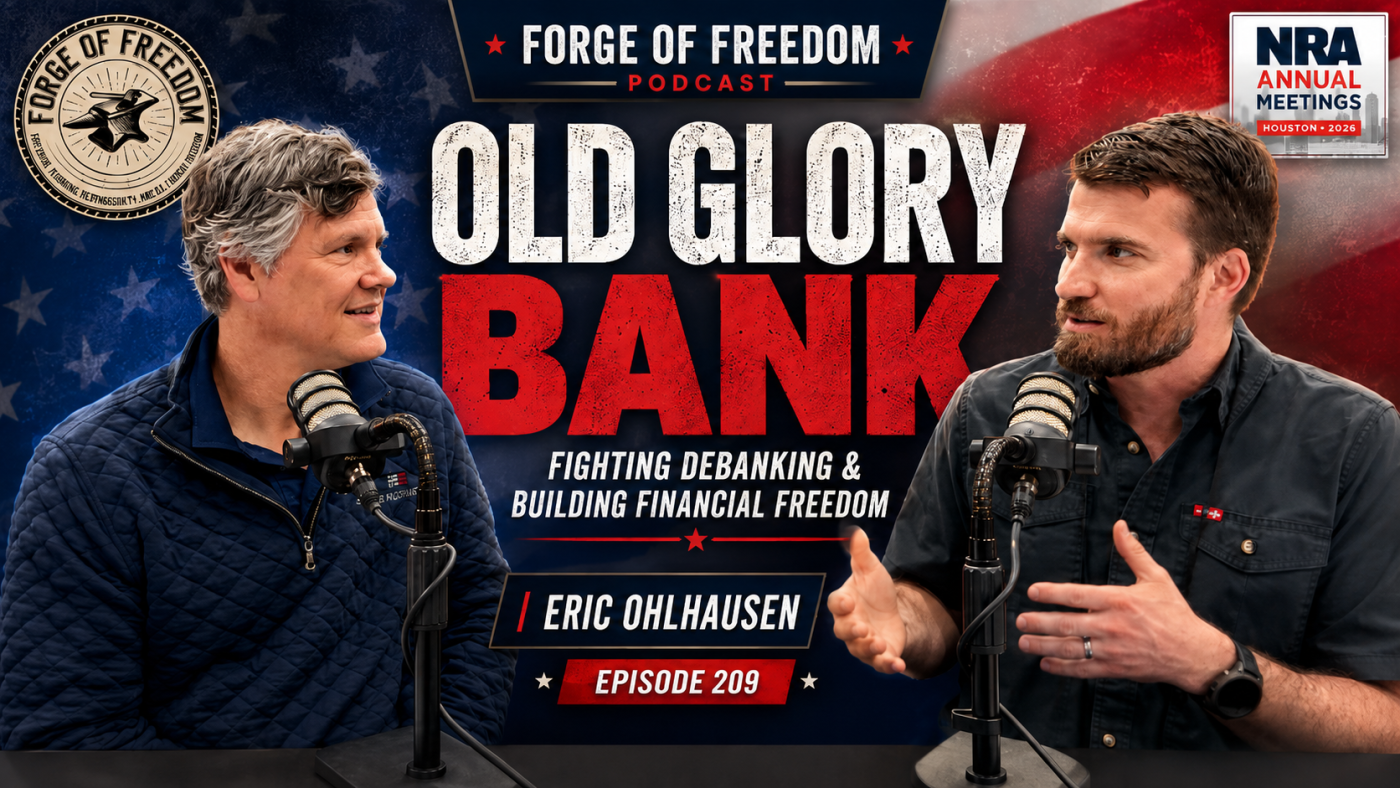
Episode 209. Old Glory Bank: Fighting Debanking and Building Financial Freedom
What happens when banks, payment processors, and financial institutions begin deciding which lawful businesses and customers are acceptable?
Recorded at the NRA Annual Meetings in Houston, Alex Ooley sits down with Eric Ohlhausen, co-founder of Old Glory Bank, to discuss debanking, financial privacy, and the importance of preserving access to the financial system for lawful individuals and businesses.
Eric explains that Old Glory Bank was created in response to growing concerns about cancel culture, political discrimination, and financial institutions refusing service to customers connected with firearms, conservative causes, law enforcement, and other lawful but controversial industries.
The conversation also explores how Old Glory Bank combines traditional FDIC-insured banking with digital-first technology, nationwide service, merchant-payment options, and planned integrations involving cryptocurrency, stablecoins, and blockchain-based banking.
Timestamps:
00:00 – Introduction to Old Glory Bank’s mission to protect liberty and support the Second Amendment
02:26 – The social and political backdrop leading to the creation of Old Glory Bank
03:39 – The founders and prominent patriots supporting Old Glory Bank, including Ben Carson and Sean Spicer
05:23 – Why banking is essential for exercising rights like free speech and firearm ownership
06:20 – The risks of deplatforming and de-banking, with real stories of account closures
08:12 – How Old Glory Bank is a regulated, FDIC-insured alternative with national reach
09:57 – Rapid growth of accounts and technological innovation in digital banking
11:09 – The friction and challenges of moving banking relationships and how Old Glory Bank simplifies switching
12:24 – Handling cash deposits through Old Glory Cash In locations
13:54 – The bank’s support for non-traditional transactions and cash-first customers
15:07 – Protecting privacy from big banks’ data sharing and invasive tracking
16:30 – The bank’s stance on privacy, second amendment rights, and the fight against government overreach
17:17 – The Old Glory Protect program offering death benefits to military and first responders
18:33 – The upcoming integration of crypto, stablecoins, and blockchain banking in next-gen technology
19:17 – The full potential of stablecoins as digital cash, lawfully backed and privacy-preserving
21:10 – Customer service, ease of account opening, and the competitive edge of Old Glory Bank’s technology
23:02 – Facilitating merchant services and the rollout of Old Glory Pay for censorship-resistant transactions
25:10 – Special NRA partnership offering fee discounts to members and upcoming plans to go public
26:33 – Final thoughts on supporting financial liberty and the importance of principled banking
In This Episode
- Why Old Glory Bank was founded
- How “debanking” can affect lawful individuals and businesses
- The history and legacy of Operation Choke Point
- Why access to banking is necessary to exercise other constitutional rights
- How major banks and payment processors treat firearms-related transactions
- Why gun owners should care about financial privacy even if they do not own a firearms business
- Whether switching banks has to be an all-or-nothing decision
- Old Glory Bank’s digital banking platform and nationwide availability
- How customers can deposit cash without visiting a traditional bank branch
- Customer-service options for a digital-first bank
- Old Glory Protect and its line-of-duty death benefit for qualifying military members and first responders
- Old Glory Pay as an alternative payment platform
- The potential role of stablecoins in financial privacy and censorship resistance
- Old Glory Bank’s planned “Next Gen Banking” platform
- Banking benefits available to qualifying NRA businesses, clubs, and associations
- Old Glory Bank’s anticipated path toward becoming a publicly traded company
Key Takeaway
The right to speak, associate, operate a lawful business, or own a firearm means less when financial institutions can prevent people from participating in the economy. Eric argues that Americans can help protect financial liberty by choosing institutions that respect lawful commerce, individual privacy, and constitutional rights.
About Eric Ohlhausen
Eric Ohlhausen is a co-founder of Old Glory Bank and has extensive experience in banking, financial technology, mergers and acquisitions, and business development. Old Glory Bank was established to provide individuals and businesses with a banking alternative grounded in respect for the Constitution, traditional American values, law enforcement, the military, and lawful commerce.
Learn More
Old Glory Bank:
https://oldglorybank.com
- Old Glory Bank
- Next Generation Banking Demo Video
- Old Glory Cash In Locations
- Old Glory Protect Program
- NRA Business Alliance
Visit the Old Glory Bank website to learn more about personal and business accounts, Old Glory Pay, Old Glory Protect, cash-deposit options, and the bank’s planned Next Gen Banking platform.
Support the Forge of Freedom
Subscribe to the Forge of Freedom Podcast for conversations about the Second Amendment, self-defense, individual liberty, constitutional government, and the responsibilities of armed citizenship.
Until next time, remember: You are the Forge of Freedom.
This episode is provided for general informational purposes. References to banking products, cryptocurrency, stablecoins, securities, or other financial services should not be understood as financial or investment advice. Product availability, benefits, fees, eligibility requirements, and regulatory status may change. Review the applicable terms and conduct your own due diligence.
Transcript:
2026-07-28 Episode 209. Old Glory Bank_ Fighting Debanking and Building Financial Freedom
DISCLAIMER: This podcast is for informational purposes only and should not be considered legal, medical, or financial advice. The views expressed in this podcast are those of the hosts and guests and do not necessarily reflect the views of any organizations or individuals they may mention. The hosts and guests are not liable for any damages that may result from someone listening to this podcast.
